
Quick answer
Pigeon Island is a marine national park off Nilaveli near Trincomalee, on Sri Lanka's east coast, known for snorkelling among reef fish, corals, and harmless blacktip reef sharks. Visit in the calm April-to-October window by licensed boat with a park ticket and timed slot, snorkel only within flagged zones, never stand on coral, and carry no single-use plastic onto the island. Morning boats offer the clearest water.
Key takeaways
- Pigeon Island is one of Sri Lanka's few structured, accessible marine parks—ideal for first-time snorkellers.
- Season matters: April to October offers the best visibility and reliable boats.
- Morning departures (around 7–9 AM) mean calmer, clearer water.
- It runs on park rules—licensed boats, tickets, flagged zones, life jackets, and no plastic on the island.
- Reef etiquette is everything: don't stand on coral, chase turtles, or touch the sharks.
Why Pigeon Island is worth the boat ride
It's one of Sri Lanka's few accessible marine parks with genuinely structured snorkelling, which makes it a natural half-day for anyone basing in Nilaveli or Uppuveli near Trincomalee. Add it before heading south or back toward the Cultural Triangle.
Manage expectations, though: reef health varies, and on peak days the island gets busy. Going early, in season, and with a good operator is what makes the experience.
What you'll see beneath the surface
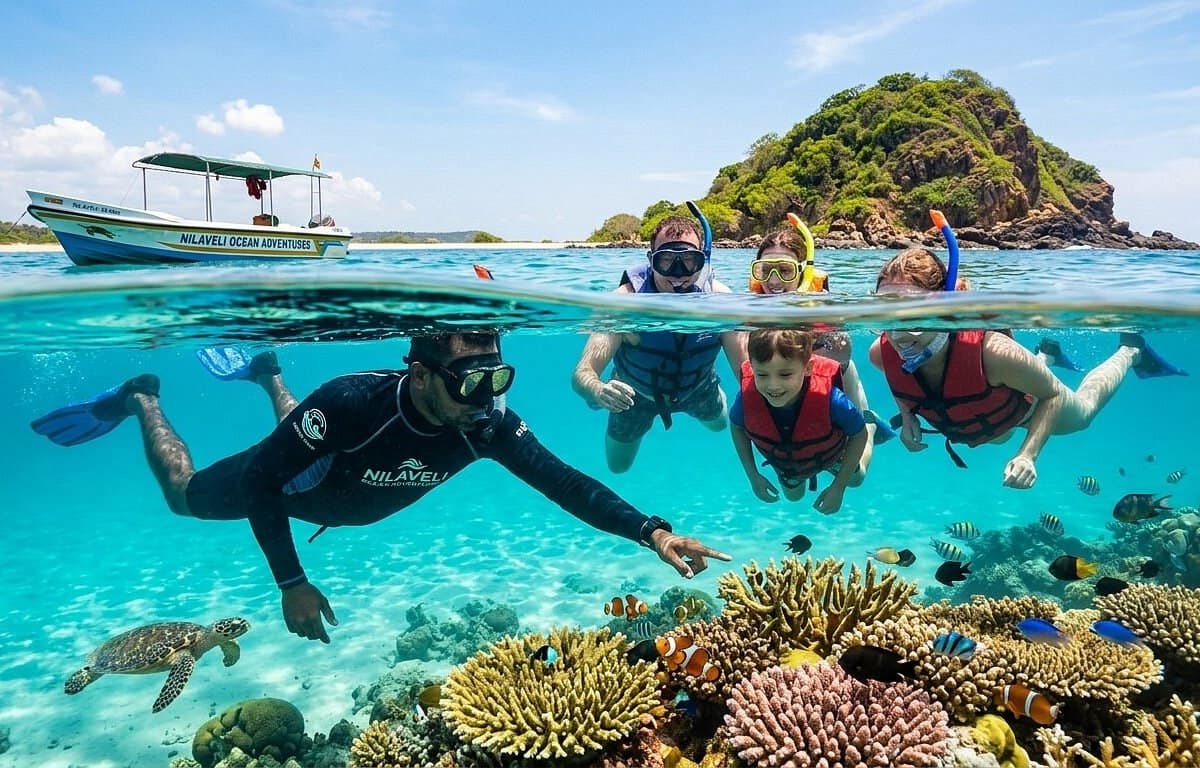
The fringing reefs off the island's eastern side hold a kaleidoscope of reef fish, hard and soft corals, and—often in the shallows—blacktip reef sharks, which are shy and harmless if you keep your distance. Turtles and rays turn up too.
A good guide briefs you on buoyancy, fin control, and shark behaviour before you get in, so you float lightly above the reef rather than crashing into it.
- →Reef fish, corals, and blacktip reef sharks in the shallows
- →Keep your distance; never chase or touch wildlife
- →Stay within flagged snorkel zones
- →Float with good buoyancy—don't stand on coral
The rules that keep the reef alive
Access is by licensed boat only—there's no swimming across—and you'll pay a national park ticket plus a boat fee. Life jackets are often mandatory, single-use plastic is banned on the island trails, and responsible operators anchor away from living reef.
If a crew feeds fish or lets guests touch sharks for photos, that's a red flag; the best operators train their crew on reef etiquette and refuse plastic packs on board.
Season, boats, and beating the crowds
Calm seas and clear water align with the east-coast dry season, roughly April to October; outside that window trips cancel often. Morning boats from Nilaveli catch the calmest, clearest conditions, and weekends and school holidays bring queues at the boat desks.
We pre-book vetted boats with insurance and spare masks, and keep a backup plan—Koneswaram Temple or Fort Frederick in Trincomalee—if the sea turns rough.
Fitting Pigeon Island into an east-coast stay
Base in Nilaveli or Uppuveli for the shortest boat access, and treat the reef as a half-day within a two-to-three-night Trincomalee stay rather than a standalone trip. Check the morning's forecast—reef days only work when the sea cooperates.
See our Pigeon Island destination guide for park rules and logistics, or ask us to build an east-coast route that pairs reef days with Trincomalee's beaches and temples on favourable forecasts.
Frequently asked questions
Is Pigeon Island worth visiting?
Yes, in the calm season and with realistic expectations—reef health varies and crowds can be high. For first-time snorkellers in Sri Lanka it's a structured, accessible option close to Trincomalee.
Are there sharks at Pigeon Island?
Blacktip reef sharks are common in the shallows and are generally shy and harmless. Follow your guide's instructions, keep your distance, don't chase or touch them, and stay within marked zones.
When is the best time to snorkel Pigeon Island?
Roughly April to October, when east-coast seas are calmest and visibility is best. Morning departures around 7–9 AM offer the clearest water. Outside this window, trips cancel frequently.
How do you get to Pigeon Island?
By licensed boat from Nilaveli beach, about 15–20 minutes depending on sea state—there's no swimming across. Park tickets, boat fees, and daily visitor quotas apply, so book ahead in peak months.
Can non-swimmers visit Pigeon Island?
Boat rides and beach walks are possible, but snorkelling requires basic comfort in the water. Life jackets help, and some guides offer supervised floats for nervous swimmers within calm zones.
Is Pigeon Island ever closed?
Yes—closures happen for conservation, weather, or maintenance. Check on the morning of travel; we monitor conditions with local boat partners and keep backup cultural plans if seas cancel boats.
Does Lankan Stays & Trails include Pigeon Island?
Yes, within east-coast modules based around Trincomalee and Nilaveli. We schedule reef days when forecasts are favourable and provide backup plans if the sea turns. Share your dates for a tailored route.