
Quick answer
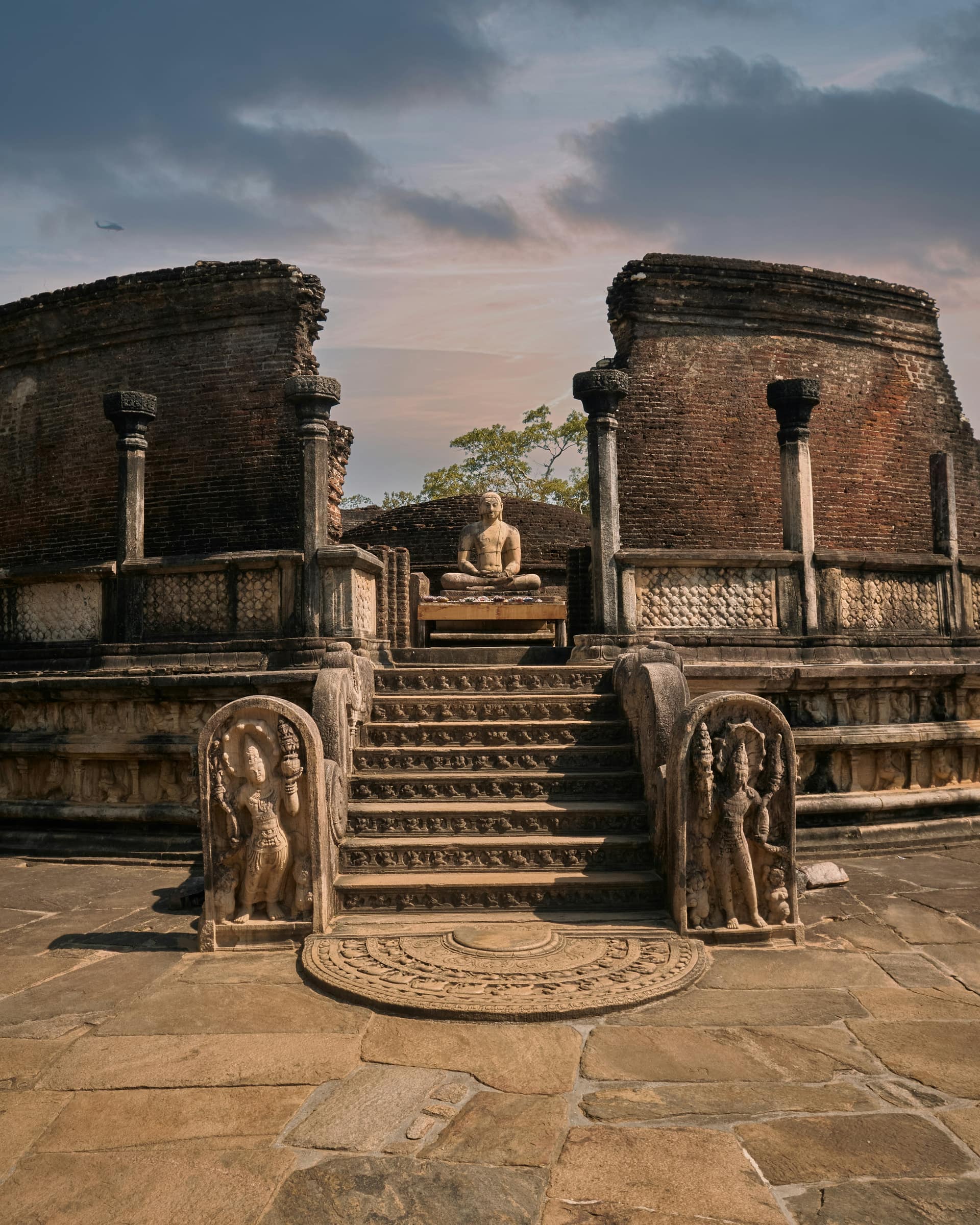
Polonnaruwa is a UNESCO World Heritage ancient city in Sri Lanka's Cultural Triangle, famed for the Gal Vihara rock-cut Buddha statues, the Quadrangle of shrines, Royal Palace ruins, and the vast Parakrama Samudra reservoir. It's compact enough to explore by bicycle in a day—start at dawn to beat the heat, rent bikes at the gate, and combine it with Sigiriya and Anuradhapura on a Cultural Triangle loop.
Key takeaways
- Polonnaruwa is compact and made for cycling—rent bikes at the entrance and start at dawn.
- Gal Vihara's four granite Buddhas are the emotional highlight; visit quietly and remove shoes near the platforms.
- It pairs naturally with Sigiriya (about an hour) and Anuradhapura (about two hours).
- One full day covers the main loop; add a second for the museum or a Minneriya safari.
- Carry water and sun protection—shade across the park is only partial.
Why Polonnaruwa is the easiest ancient city to love
After Anuradhapura's sprawl, Polonnaruwa feels human-scaled. This was Sri Lanka's capital in the 11th and 12th centuries, a high point of Sinhalese urban planning, irrigation, and sculpture, and the ruins sit close enough together to link on a single relaxed ride.
Most travellers base in nearby Habarana or Giritale, about 45 minutes from the gate, which also opens up safari add-ons at Minneriya when the elephants gather.
Gal Vihara: four Buddhas in granite
Gal Vihara is the reason many people come: four Buddha figures carved from a single granite face in the 12th century, including a serene reclining Buddha some 14 metres long. The carving's stillness quiets even busy groups.
Treat it as sacred space—remove shoes near the platforms, keep your voice low, don't climb on the statues, and let others have their moment of silence.
- →Remove shoes near the sacred platforms
- →No climbing on statues or relic houses
- →Flash photography discouraged near devotees
- →Visit early to beat tour-bus crowds
Cycling the archaeological park
From the gate, the loop links the Royal Palace ruins, the Quadrangle's cluster of shrines, the great Rankoth Vehera stupa, and lotus-fringed ponds. Bicycles let you cover it comfortably with stops for shade and photography.
Carry two litres of water per person, secure your bag against opportunistic monkeys, and aim to be off the bike through the hottest hours.
The great tank and a possible safari
End the day at Parakrama Samudra, the immense reservoir built by King Parakramabahu I, whose famous maxim was that no drop of rain should reach the sea unused. Sunset over the water is a fitting close to a heritage day.
In the July-to-September window, wild elephants gather at nearby Minneriya and Kaudulla—view only from licensed safaris at ethical distances, never on foot.
Planning your Cultural Triangle days
One full day handles the cycle loop and Gal Vihara; a second adds the museum or a Minneriya safari. Sequencing Polonnaruwa with a Sigiriya sunrise and an Anuradhapura cycle gives you the complete Cultural Triangle without rushing any of it.
See our Polonnaruwa destination guide for tickets, seasons, and routing, or ask us to plan a private heritage loop with archaeologist guides and community bike shops.
Frequently asked questions
How long do you need in Polonnaruwa?
One full day covers the main cycle loop and Gal Vihara. Add a second day for the museum, a village cooking experience, or a Minneriya safari if elephants are gathering nearby.
Is Polonnaruwa better than Anuradhapura?
They're different eras and scales—Polonnaruwa is compact and medieval, Anuradhapura older, larger, and more spiritually active. Many itineraries include both with a night between, and that's what we recommend.
Can I explore Polonnaruwa without cycling?
Yes—e-bikes or a private vehicle work, and the museum and major sites are accessible by car. But the park is spread out and hot, so dawn cycling is the most enjoyable way for most visitors.
What is Gal Vihara?
Gal Vihara is a group of four Buddha statues carved from a single granite rock face in the 12th century, considered masterpieces of Sinhalese art and the emotional highlight of Polonnaruwa for many visitors.
When is the best time to visit Polonnaruwa?
January to April is relatively dry with comfortable mornings; July to September works well for routes continuing east to Trincomalee. Start cycling at 6–7 AM year-round for cooler air.
Are there elephants near Polonnaruwa?
Wild elephants appear seasonally near the tanks and gather at Minneriya and Kaudulla from roughly July to September. View only from licensed safaris at safe distances—never approach on foot.
Does Lankan Stays & Trails offer Polonnaruwa tours?
Yes. Our culture itineraries pair Polonnaruwa cycling mornings with Sigiriya climbs and east-coast extensions to Trincomalee when the seasons align. Share your dates for a tailored plan.