
Quick answer
Wilpattu is Sri Lanka's largest national park, on the northwest, named for its 'willus'—natural sand-rimmed lakes. It offers leopard, sloth bear, elephant, deer, and rich birdlife in a quieter, more forested setting than Yala. The drier season runs roughly February to October, jeep safaris run at dawn and afternoon, and it pairs naturally with Anuradhapura (about an hour) or a northbound route. Sightings take patience but reward it with solitude.
Key takeaways
- Wilpattu is larger, wilder, and far less crowded than Yala—solitude over sighting density.
- Its 'willu' lakes are the prime spots where wildlife gathers to drink.
- It's one of the better places to combine a chance of leopard with sloth bear (best around June).
- The drier season is roughly February to October; tracks get muddy in the northeast monsoon.
- Pair it with Anuradhapura, about an hour away, for heritage plus wildlife.
Why choose Wilpattu over Yala
Yala wins on leopard density and loses on crowds; Wilpattu is the opposite. Its forest is thicker and sightings can take more patience, but the payoff is a genuine sense of wilderness and rarely more than a jeep or two at any encounter.
For travellers who value the quality of the experience over the certainty of a tick, Wilpattu is the leopard country to choose.
The willus: lakes that make the park
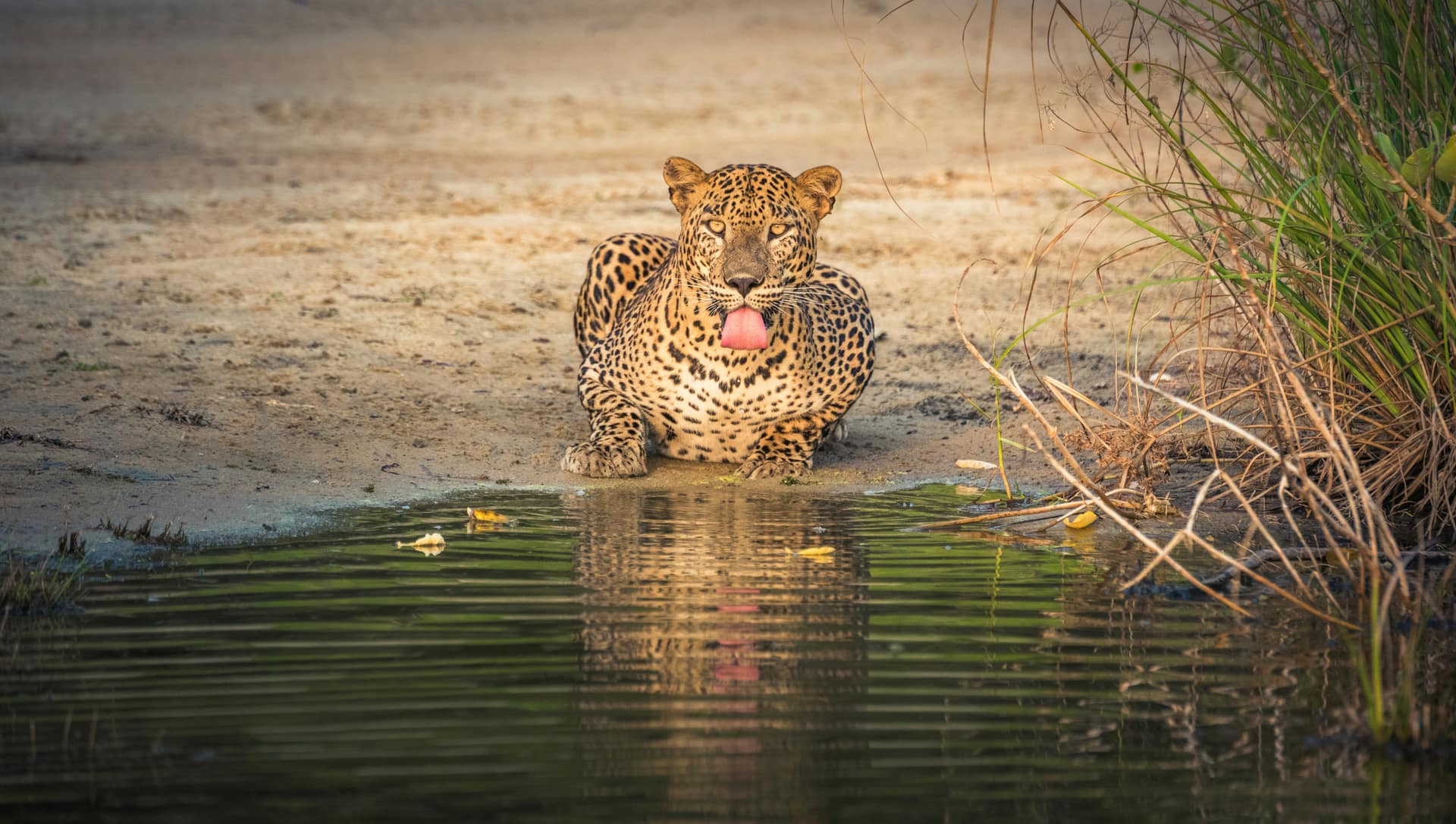
Wilpattu's signature feature is its willus—shallow natural lakes ringed by white sand where animals come to drink. They create beautiful, productive safari scenes: deer at the water, crocodiles basking, and, with luck, a leopard padding the shoreline.
Reading the willus is how good trackers find wildlife here, working the water's edges rather than racing the radio.
- →Willu lakeshores are prime wildlife-watching spots
- →Dawn drives are coolest and most active
- →Patience and quiet beat chasing reports
- →Birdlife around the lakes is excellent
Leopards, sloth bears, and patience
Wilpattu is one of the better parks to combine a chance of leopard with the elusive sloth bear, whose odds rise around June when the palu trees fruit. Elephants, sambar and spotted deer, crocodiles, and abundant birds complete the cast.
As everywhere, sightings are never guaranteed. Ethical operators keep distance, wait quietly, and let the forest reveal itself—which is exactly the Wilpattu way.
Pairing Wilpattu with the sacred north
Wilpattu sits about an hour from Anuradhapura, so a sacred-city morning pairs beautifully with an afternoon safari. It also makes a logical wildlife stop on routes heading north toward Jaffna or looping back to the Cultural Triangle.
See our Wilpattu destination guide for seasons and logistics, or ask us to plan a private route combining the quiet wild with the island's ancient heart.
Frequently asked questions
Is Wilpattu better than Yala for safari?
It depends on what you want. Yala has higher leopard density but more jeeps; Wilpattu is larger, quieter, and wilder, with a good chance of leopard plus sloth bear. Many wildlife lovers prefer Wilpattu's solitude.
What animals can you see in Wilpattu?
Leopard, sloth bear, elephant, spotted and sambar deer, crocodiles, and abundant birdlife around the willu lakes. Sloth bear sightings improve around June when palu trees fruit.
When is the best time to visit Wilpattu?
Roughly February to October, when tracks are drier and wildlife concentrates near water. The northeast monsoon (October to January) brings rain and can make parts of the park hard to access.
How far is Wilpattu from Anuradhapura?
About an hour by road, which is why many travellers pair a morning at Anuradhapura's sacred city with an afternoon safari in Wilpattu.
What are the 'willus' in Wilpattu?
Willus are the natural, sand-rimmed lakes that give Wilpattu its name and character. Wildlife gathers at their shores to drink, making them the park's prime safari-watching spots.
Does Lankan Stays & Trails book Wilpattu safaris?
Yes, with ethical camps and trackers, sensible pacing, and pairing to Anuradhapura or northern routes. Share your dates and wildlife interests for a tailored plan.